


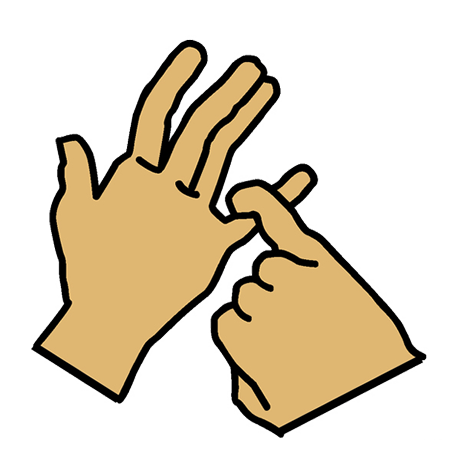
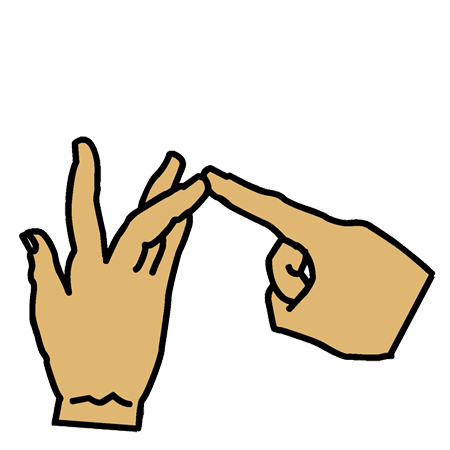
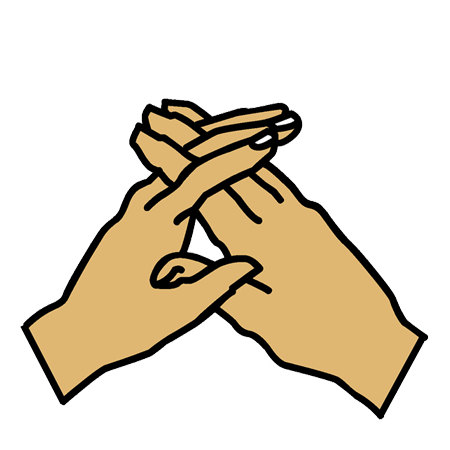
01
One-meeting BSL taster
Open the Fingerspelling Player on a screen, let members fingerspell their name, then hand out a printed name strip and the alphabet chart to take home. Around 20 minutes, with only a few minutes of preparation.
For Scouts, Guides & youth groups
Drop-in BSL activities and printables for Scouts, Guides and other youth groups. Designed for short, focused sessions that leaders can run without prior BSL knowledge.
Meeting plan
A 45–60 minute introductory session on non-spoken communication, BSL fingerspelling and a few beginner British Sign Language signs. Four activities and four downloadable PowerPoint and PDF resources – no prior BSL knowledge needed. Adaptable for Cubs, Scouts, Brownies, Guides and similar sections.
Free tools for meetings & camps
Members watch their own name fingerspelled in BSL – a simple, memorable first step.
Type any name or word and watch it fingerspelled in BSL, with adjustable speed, hand preference and skin tone.
OpenPrint each member’s name in BSL fingerspelling for a name-badge night or section noticeboard.
Generate a printable fingerspelling image of any name or word – handy for name labels, displays and take-home keepsakes.
OpenBuild a themed sheet around an evening’s topic (woodland animals, weather, family) and hand out as a takeaway.
Choose up to 12 signs from our library, pick a colour and download a printable A4 sheet.
OpenGenerate a fingerspelling word search around your section’s programme theme in seconds.
Build a BSL fingerspelling word search around any theme or your own list of words.
OpenA short BSL fingerspelling puzzle that works as a calm 5-minute activity for older sections.
A fresh BSL fingerspelling puzzle every day. Use the seven fingerspelling letters to find as many words as you can.
Open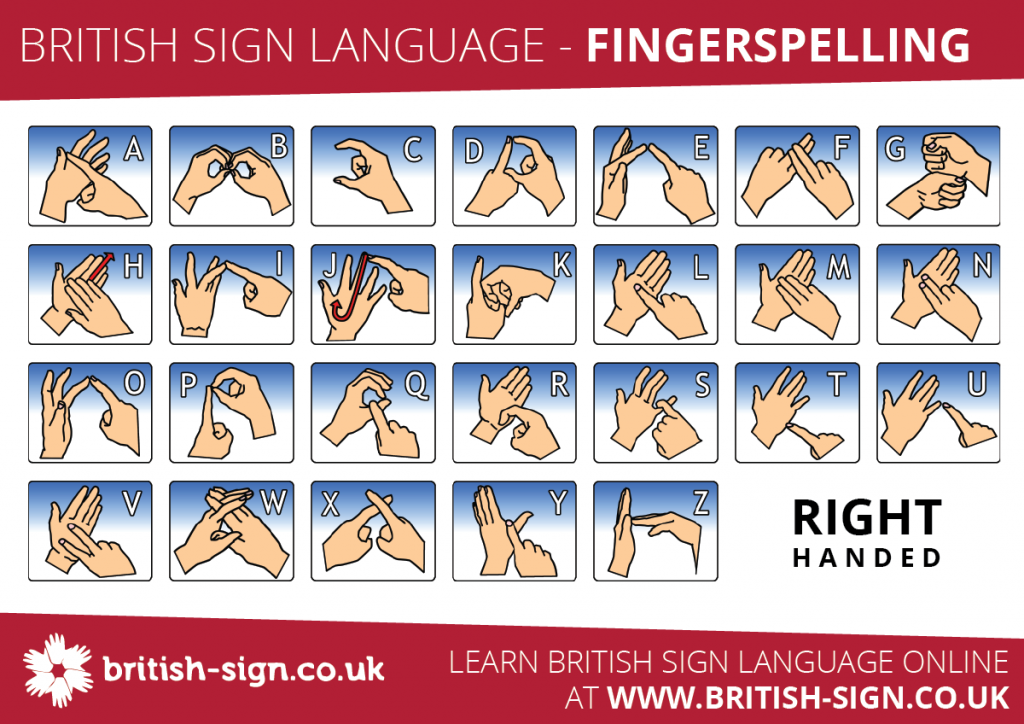
Print the BSL fingerspelling alphabet chart to pin up in your meeting place or take to camp.
Every free BSL tool, game and printable in one place.
OpenHow to use them
01
Open the Fingerspelling Player on a screen, let members fingerspell their name, then hand out a printed name strip and the alphabet chart to take home. Around 20 minutes, with only a few minutes of preparation.
02
Use the tools to support communication and BSL-themed badge work across youth groups. They fit well alongside the Scouts Communicator Activity Badge (Cubs, Scouts and similar sections) and Girlguiding’s “Sign it spell it” activity within the Communicate Stage 3 skills builder (Brownies, Guides) – the Fingerspelling Player and alphabet chart match the introducing-yourself and short-word recognition tasks particularly well. Badge requirements can change, so check the current official badge or skills-builder page before running the activity. Use content created by Deaf BSL tutors or Deaf-led organisations. For a live session, invite a Deaf BSL tutor or another suitably qualified BSL tutor, agree the activity in advance and offer appropriate payment.
03
Build a themed vocab sheet (woodland animals, weather, family) before camp and print enough for the group. Use it in a well-lit hut, marquee or sheltered activity space for a 15–20 minute activity. Fingerspelling needs clear lighting and visibility.
04
Combine a printed BSL alphabet chart, a themed fingerspelling word search and a short discussion about Deaf culture as part of an inclusion-themed programme block.
Practical BSL games
Before you run theseLeaders should adapt movement-based games to their venue, group and usual risk assessment. Walking, wheeling and tabletop versions are equally valid – score them the same as running versions.
Adjust the difficultyPrint your fingerspelling letter cards with the written letter beneath the image for beginners, or with the image alone for a harder challenge. The same card sets work across most of the games below.
PractisesRecognising fingerspelling letters and reading complete words
Make it harderUse image-only letter cards. Show the target word once with the Fingerspelling Player, then hide it before the relay begins.
Inclusive versionPlayers walk, wheel, or nominate a card finder. The activity should not depend on running speed.
Download what you need for this gamePractisesDecoding complete fingerspelled words and matching them to objects
Make it harderShow the fingerspelled word for ten seconds then hide it, so teams have to remember it before they search. Or after collecting the object, one member fingerspells its name to another team.
Inclusive versionBring items to the team rather than the team to the items, or run as a tabletop version using item picture cards instead of physical kit.
Download what you need for this gamePractisesReading complete fingerspelled words
Make it harderAdd a short instruction after each decoded word for teams to complete before moving on.
Inclusive versionRun as a tabletop version: numbered envelopes on tables instead of stations across a field.
Download what you need for this gamePractisesReading fingerspelled words
Make it harderMove up to names and longer programme vocabulary. Show each word only once.
Inclusive versionAllow players to ask for a repeat, and keep a paper copy of the alphabet chart on the table for anyone who needs a reference.
Download what you need for this gamePractisesReading fingerspelled words – great as a recurring meeting opener
Make it harderShow each word only once. Move to four–five-letter words and names.
Inclusive versionReplay the word more slowly, pause between letters, or let a confident member repeat the complete word afterwards for any team that needs it.
PractisesFast letter recognition
Make it harderCall out or display a written letter. Members form the fingerspelling letter themselves before moving to the matching image-only corner.
Inclusive versionMembers point at the matching corner, hold up a number card, or move a counter on a printed table map. Run a seated version where corners are areas of a tablecloth.
Download what you need for this gamePractisesMatching written letters to fingerspelling letters
Make it harderUse whole-word cards instead of letters (written word paired with the same word in fingerspelling images).
Inclusive versionPairs is the quieter, slower-paced option – better for younger groups, calm-downs and sensory-aware sessions.
Download what you need for this gameMost games use the BSL fingerspelling alphabet poster alongside simple letter or word cards. Everything is in the downloadable games pack at the top of this section.
By section
Stick to a few visual, repeatable signs (hello, please, thank you, family signs, a couple of animals). Use the Family Signs and Greeting Signs posters together and reuse the same handful of signs across a few meetings so they actually stick.
Introduce the BSL fingerspelling alphabet visually using the printable chart. Members use the Fingerspelling Player to learn how to fingerspell their own first name. Build a vocab sheet around your current programme theme to take home. Focus on introducing themselves, exchanging names and recognising short fingerspelled words.
These activities work well alongside communication-themed badge activities. Practise introducing yourself, exchange names with a partner, and recognise short fingerspelled words from the alphabet poster. Today’s Signspell can be a short 5-minute opener at the start of a meeting.
Older members can practise introductions, exchange names, recognise longer fingerspelled words and learn a short BSL conversation using established signs – with fingerspelling used for names and unfamiliar words rather than for an entire conversation. The Vocab Sheet Maker and Fingerspelling Quiz both support this kind of practice. Where possible, invite a Deaf BSL tutor, Deaf-led organisation or qualified BSL tutor to contribute, with the activity and access agreed in advance and suitable payment offered for their time. If communication support is needed during the visit, arrange a registered BSL/English interpreter separately.
Activity ideas
In the diary
A natural moment to weave a short BSL activity into your programme. Open with the alphabet chart, fingerspell members’ names and finish with a short word search to take home.
Marks the UK Government’s recognition of BSL in March 2003 (now reinforced by the BSL Act 2022). A good week for a programme block on language, identity and accessibility.
A UN-recognised day celebrating sign languages worldwide. Pair our BSL tools with a short discussion of how sign languages differ between countries (BSL, American Sign Language, Irish Sign Language, Auslan and many more).
Why include BSL
Inclusion, communication and respect sit at the heart of both Scouting and Guiding. Introducing BSL is a concrete way to make those values visible at your meeting place.
BSL has its own grammar, vocabulary and history. It was formally recognised as a language in its own right by the UK Government in 2003, and the British Sign Language Act 2022 gave it legal recognition as a language of England, Wales and Scotland (the Act does not extend to Northern Ireland). Even an introductory taster helps members understand language and Deaf identity more clearly.
The Scouts Communicator Activity Badge and the Girlguiding Communicate skills builder both include sign language as a recognised method. These free tools give leaders a quick starting point for those tasks.
You don’t need to commit to weeks of programming. The tools work for a single 20-minute meeting block, a camp evening, an inclusion week, or as small recurring openers across a term.
Quick downloads
Going further
Our 10-section CPD-certified online BSL course suits leaders who want to take it further after these free resources. Pay What You Can from £5 per learner. Group enrolment is a single payment, and each learner gets their own certificate.
Beyond our site
Questions
No. The tools are designed to be used without prior BSL knowledge. Your role is to set up the activity and learn alongside your group. They use the supplied materials for introductory activities and are not a substitute for teaching from an appropriately skilled and experienced BSL tutor.
These tools can support preparation for the BSL-based tasks, but do not complete the current badge requirements on their own. The current sign-language option includes holding a conversation, describing an experience and helping facilitate a short conversation between a sign-language user and someone who does not sign. Always check the official Scouts page, as the badge is being refreshed.
Yes. The Girlguiding Communicate Stage 3 skills builder includes a BSL activity (“Sign it spell it”). The Fingerspelling Player, Word/Name Printer and alphabet chart work particularly well with the activity. Always check the official Girlguiding page for the current requirements.
Yes, with the right pick. Stick to the visual printables (family signs, greeting signs) and use a few signs repeatedly over several meetings. Save the full fingerspelling alphabet for sections where members are confident with letters.
Yes. The free printables and tool outputs are free to use with your group. Please keep our brand mark visible, do not resell them, and do not upload them to other resource marketplaces as your own.
Talk directly with the member in an age-appropriate way, involving their family or carers where appropriate. Ask what communication and access arrangements work for them rather than making assumptions. If inviting a Deaf contributor, agree the purpose and format in advance, offer appropriate payment, and do not expect one person to represent the whole Deaf community.
Yes, please do. The pages and tools are stable URLs we maintain. Deep links into specific printables or the Vocab Sheet Maker work the same way.